Pink Peppercorns
Material ID: 1943



Description
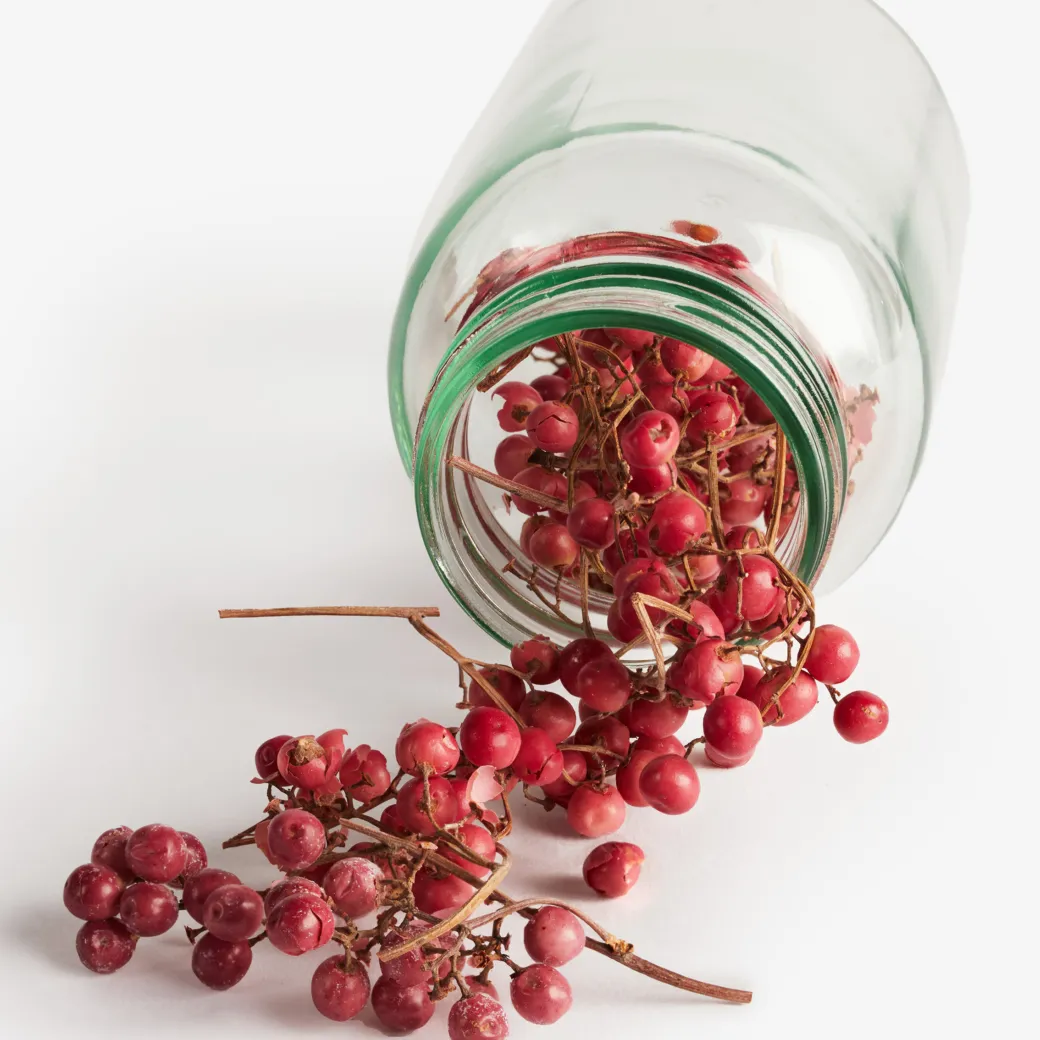
This twiglet of pink berries is pink peppercorn, a perfumery ingredient prized for its fresh and spicy scent. These little rosy, spherical fruits of the Schinus molle plant are not to be confused with black pepper, the culinary staple that we grind on our scrambled eggs and pasta. Pink peppercorns come from a different botanical species altogether, and have a less pungent, fruitier, sweeter and milder flavour. They originally hail from the Andean region of Peru, but because they are a very hardy and drought-tolerant species, the trees have since spread to other areas of South, Central and North America, Africa and the Mediterranean.
Pink peppercorns can be eaten (in small amounts) and historically have been used to make a variation of chicha, the ceremonially important Andean fermented maize drink that often requires the maker to masticate (chew and spit out) the corn to release the sugars and speed fermentation. Archaeological studies of the production of chica de molle, however, show that Wari (pre-Incan south-central Andean) women were not chewing these pink peppercorns, but were using complex malting and brewing processes as far back as 600 AD. This historic drink has since been reconstructed, in a collaboration between archaeologists and Chicago craft brewers, to create a modern-day bright pinky-red ale called Wari.
This sample is one of a collection of raw perfume ingredients generously donated to us by Roja Dove, a master perfumer, fragrance historian and storyteller, whose intoxicating bespoke scents use only the finest ingredients. As Roja details in his book The Essence of Perfume, essential oils derived from pink peppercorns are a relatively new addition to the perfumer’s palette, as they only became readily available in the twenty-first century. They are known for the fresh, woody-rosy, lingering spiciness that they lend to fragrances such as Estée Lauder’s Pleasures.
This multi-talented plant is also used to make a kind of honey derived from the sugary resin inside the berry’s papery coat, as a cockroach-repellent, and in traditional medicines for the treatment of everything from gonorrhoea to gingivitis.
Library Details
Site
Stratford
Status
In Library
Location
Wooden Shelves
Form
Sphere
Handling guidance
Wash hands after handling.
Date entered collection
Thursday 2nd May, 2024


